
This content is for educational and informational purposes only and should not be considered financial advice.
For many beginners, choosing a prop firm can feel overwhelming at first.
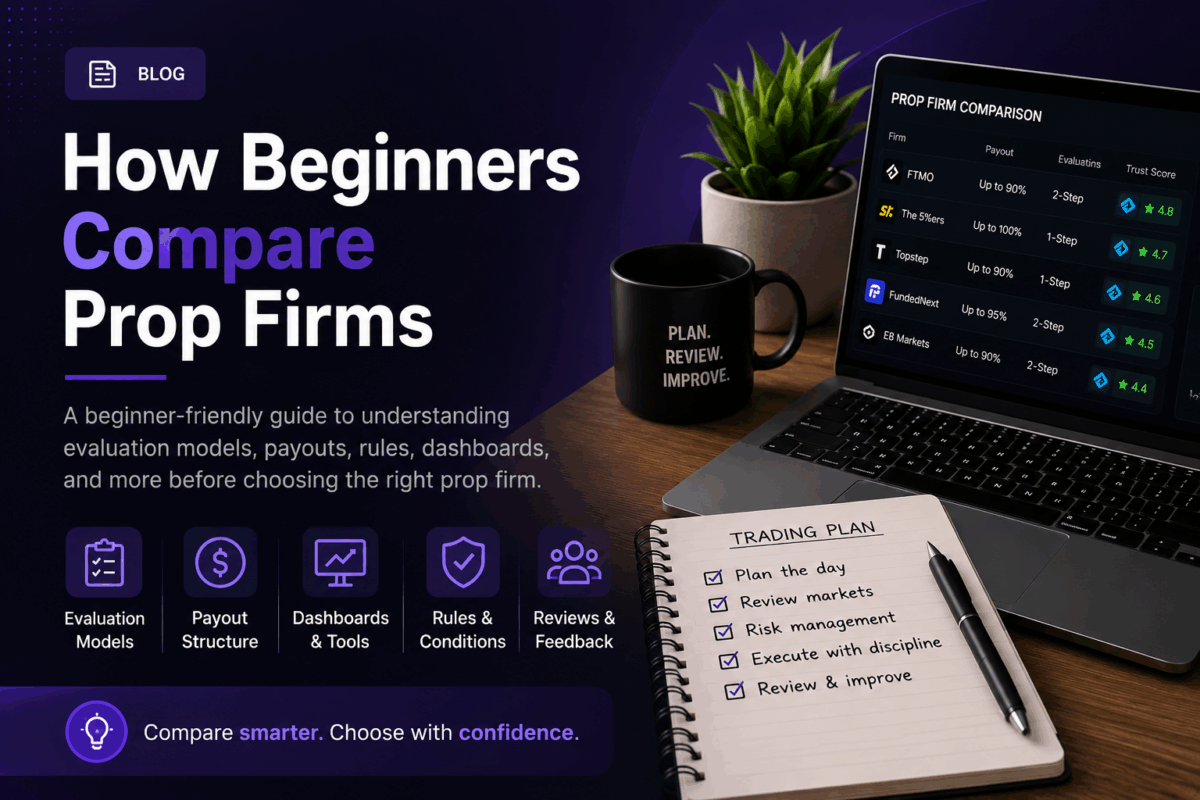
Different firms may offer different evaluation models, payout structures, pricing, trading rules, and platform experiences. Because of this, many traders spend time comparing features before deciding which option fits their goals and preferences.
Understanding the most common comparison points can help beginners navigate the process more confidently.
Evaluation Models
One of the first things many beginners compare is the evaluation structure.
Some firms use:
- one-step evaluations
- two-step evaluations
- instant funding models
- challenge-based systems
Each model may have different rules, objectives, and timelines.
Beginners often review:
- profit targets
- maximum drawdown limits
- consistency rules
- trading restrictions
- account scaling opportunities
Understanding these differences can help traders choose a structure that matches their learning style and risk tolerance.
Pricing and Account Sizes
Many firms offer multiple account sizes and pricing options.
Beginners often compare:
- evaluation fees
- reset costs
- available account balances
- scaling potential
- promotional offers
Some traders prefer smaller starting accounts while learning, while others compare larger evaluation programs depending on their experience level.
Payout Structures
Payout policies are another important comparison factor.
Traders often review:
- payout frequency
- payout split percentages
- withdrawal requirements
- minimum payout thresholds
- scaling opportunities
Different firms may structure payouts differently, so understanding these details ahead of time can help avoid confusion later.
Trading Platforms and Dashboard Experience
Platform usability is also important for many beginners.
Some traders compare:
- dashboard design
- account analytics
- execution speed
- platform integrations
- mobile accessibility
- reporting features
A clean and organized interface can make it easier to monitor progress and stay focused throughout the evaluation process.
Rules and Restrictions
Different firms may apply different trading rules.
Beginners often review:
- news trading policies
- overnight holding rules
- consistency requirements
- position sizing limits
- maximum daily drawdown rules
Understanding these guidelines can help traders identify which environments align better with their preferred trading style.
Community Feedback and Reviews
Many traders also spend time reading reviews and community discussions before choosing a firm.
They may compare:
- customer support experiences
- payout feedback
- platform reliability
- educational resources
- overall user satisfaction
Community reviews can help provide additional perspective when comparing multiple options.
Focusing on Education and Consistency
For beginners, learning and consistency are often more important than speed.
Many traders spend time:
- reviewing firm rules carefully
- practicing with demo environments
- building routines
- improving discipline
- focusing on long-term development
Taking time to compare features and understand how different firms operate can help create a more informed learning experience.
Final Thoughts
Choosing a prop firm is rarely just about one feature alone.
Many beginners compare evaluation structures, payouts, rules, dashboards, and overall user experience before making a decision.
By approaching the process carefully and focusing on education first, traders can better understand which environments fit their personal goals and preferences.
This content is for educational and informational purposes only and should not be considered financial advice.
